
Ociate isn't software anymore, it's staff.


Every agent we talk to has the same three jobs that never get done properly. The phone rings while they are at an open home. An enquiry comes in at 9pm and gets answered at 11am the next day, by which point the buyer has booked three other inspections. And the database, the thing they have spent ten years building, sits there while they cold call strangers.
None of that is a software problem. It is a staffing problem. Nobody has a spare person to sit by the phone, answer every enquiry inside a minute, write the Monday vendor report and go through four thousand contacts every night looking for the ten worth ringing. So we built that person. Four of them, actually.
They live in a new part of Ociate called the Office.
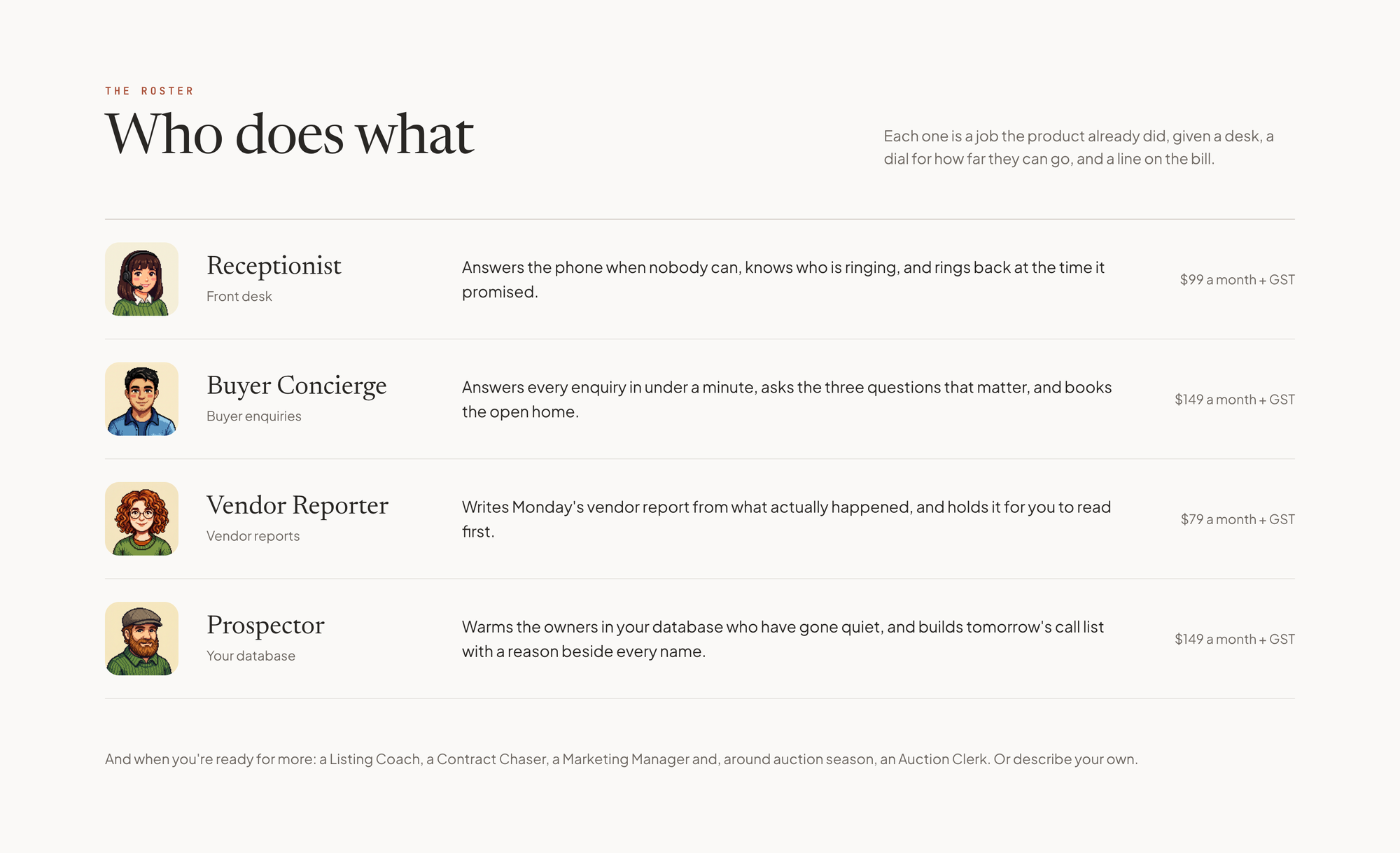
Who they are
The Receptionist. When you cannot pick up, the Receptionist does. They know who is ringing before they say hello, so a vendor whose house you are selling gets greeted by name instead of "can I take your name?". They take the message properly, tell you what the call was actually about, and when they promised a call back they ring back.
The Buyer Concierge. Every enquiry gets a reply in under a minute, day or night. Then the Concierge asks the three questions that decide whether this person is worth your Saturday: when are they buying, is the money real, and do they have a house of their own to sell. One question per message, never more than three, and never one you already know the answer to. If they say "just looking", that is an answer, and it is left there.
The Vendor Reporter. Monday's vendor report, written from what actually happened that week: enquiries, who registered against who actually turned up, the shape of the feedback, days on market. A quiet week gets one honest sentence rather than a page of zeros. Nothing goes to your vendor without you reading it first.
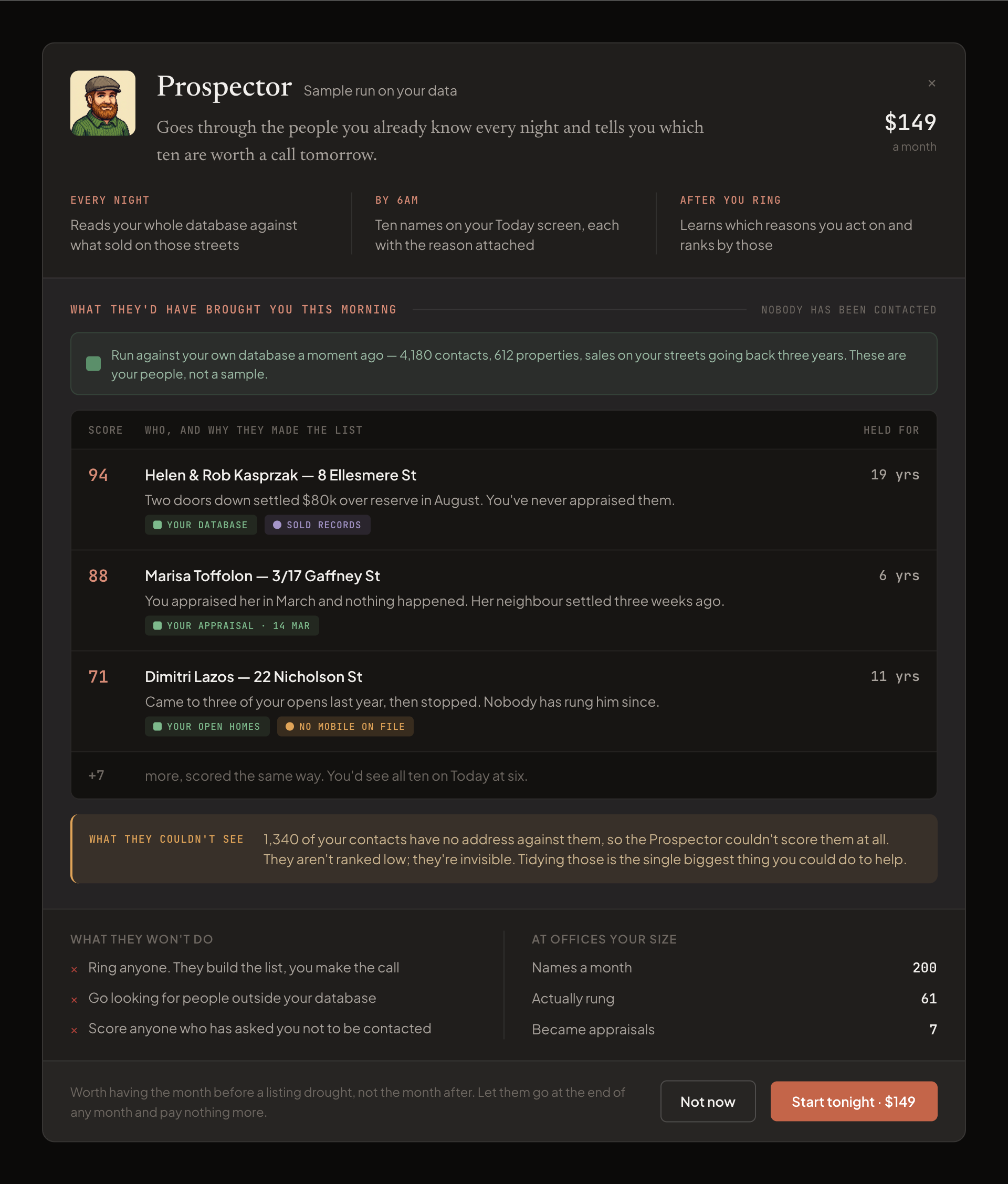
The Prospector. Every night the Prospector goes through the people you already know and works out which ten are worth a call tomorrow, with the reason written next to each name. Two doors down sold $80k over reserve. You appraised her in March and her neighbour just settled. A name with a reason gets a call back. A name on its own is a cold call.
There are more when you want them: a Listing Coach, a Contract Chaser, a Marketing Manager, an Auction Clerk for the busy season, and if you have two on the team already you can describe your own.
The bit that makes it safe
The obvious worry with anything like this is the day it texts the wrong person something stupid in your name. So everything here starts timid and you decide how far it goes.
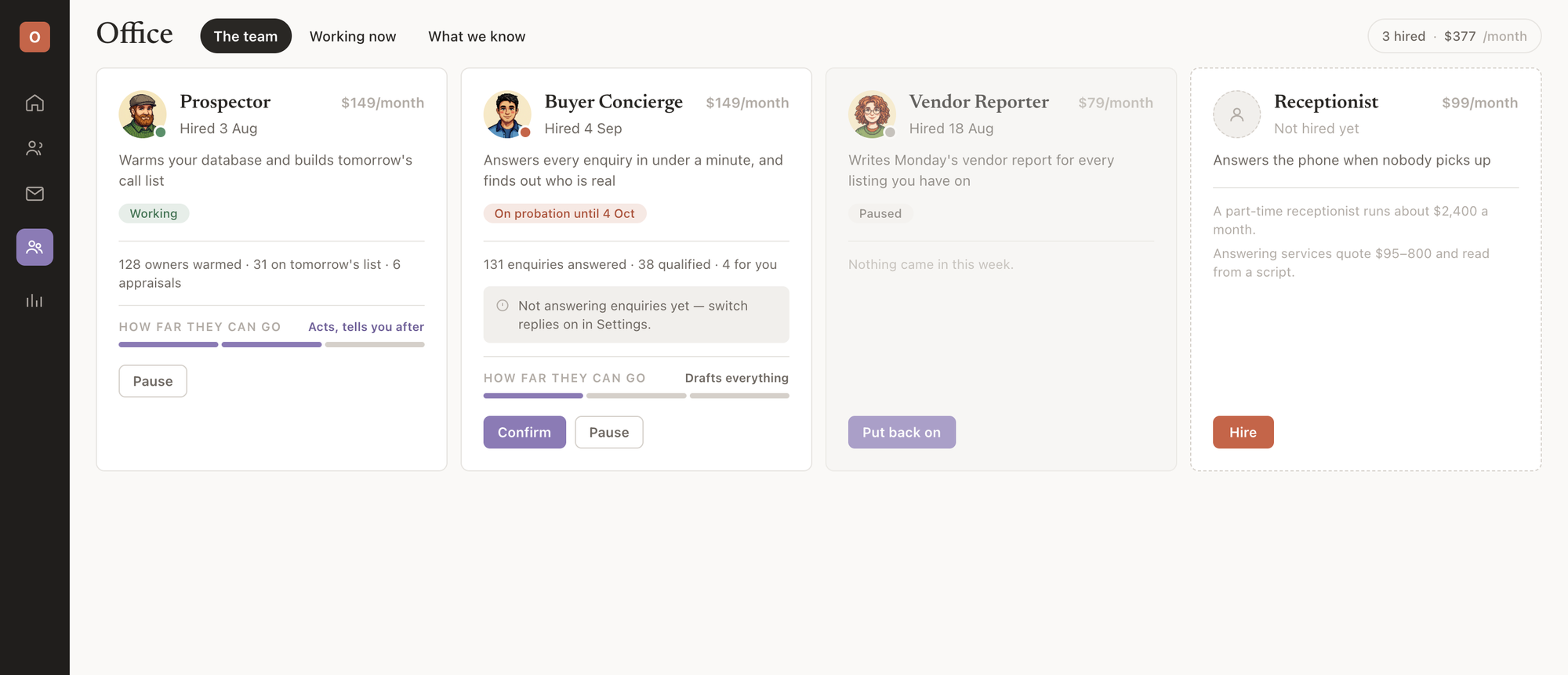
Each employee has a dial. At the bottom they draft everything and you send it. One notch up they act and tell you after. A new hire spends their first fortnight on probation, drafting, until you have seen enough of their work to trust it. You can confirm them early if they have earned it.
There are things none of them will ever do, whatever the dial says. Talk about commission. Give legal or financial advice. Quote a price you have not published. Text anyone who has opted out, anyone on the do not call register, or anyone at night. Those are not settings you can switch off, because they are not features.
And everything they write sounds like a person wrote it. We strip out the tells that make a text read as generated, and every figure in a message is checked against your own records before it goes.
Their desk
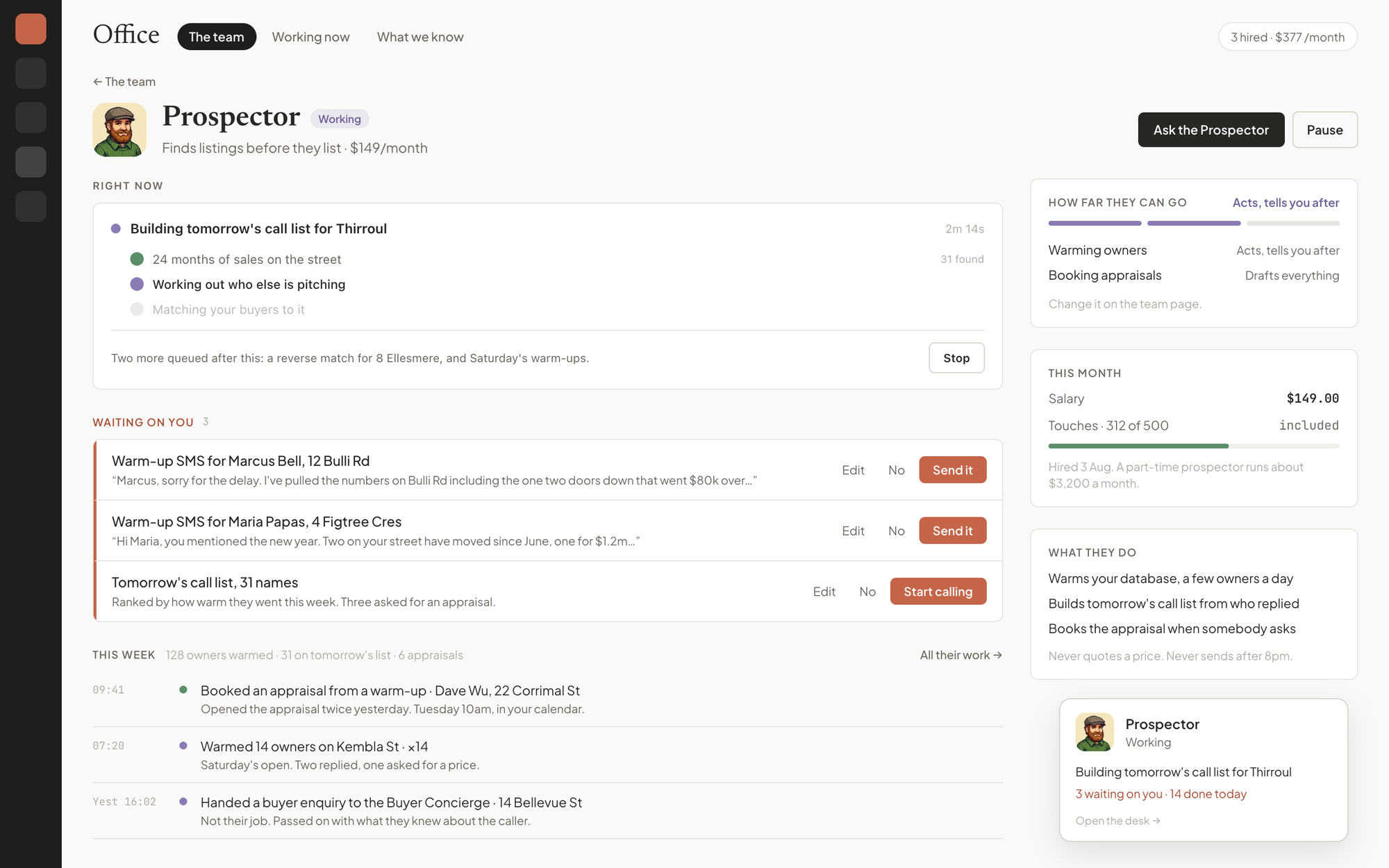
Click any face and you get their desk: what they are working on right now, what is waiting on you, what they did this week, and what this month has cost.
Before you hire anyone you can read their resume, and it is not a brochure. It is a sample of the actual work, run against your own data. The Prospector's resume is tonight's call list, built from your database, with nobody contacted. You can try the Buyer Concierge as a buyer and call the Receptionist in the browser. Nothing you do there reaches a real person.
If you would rather see them work before paying, you can interview a hire for a week, free.
Today
The dashboard is gone. In its place is Today, which is where you land when you log in.
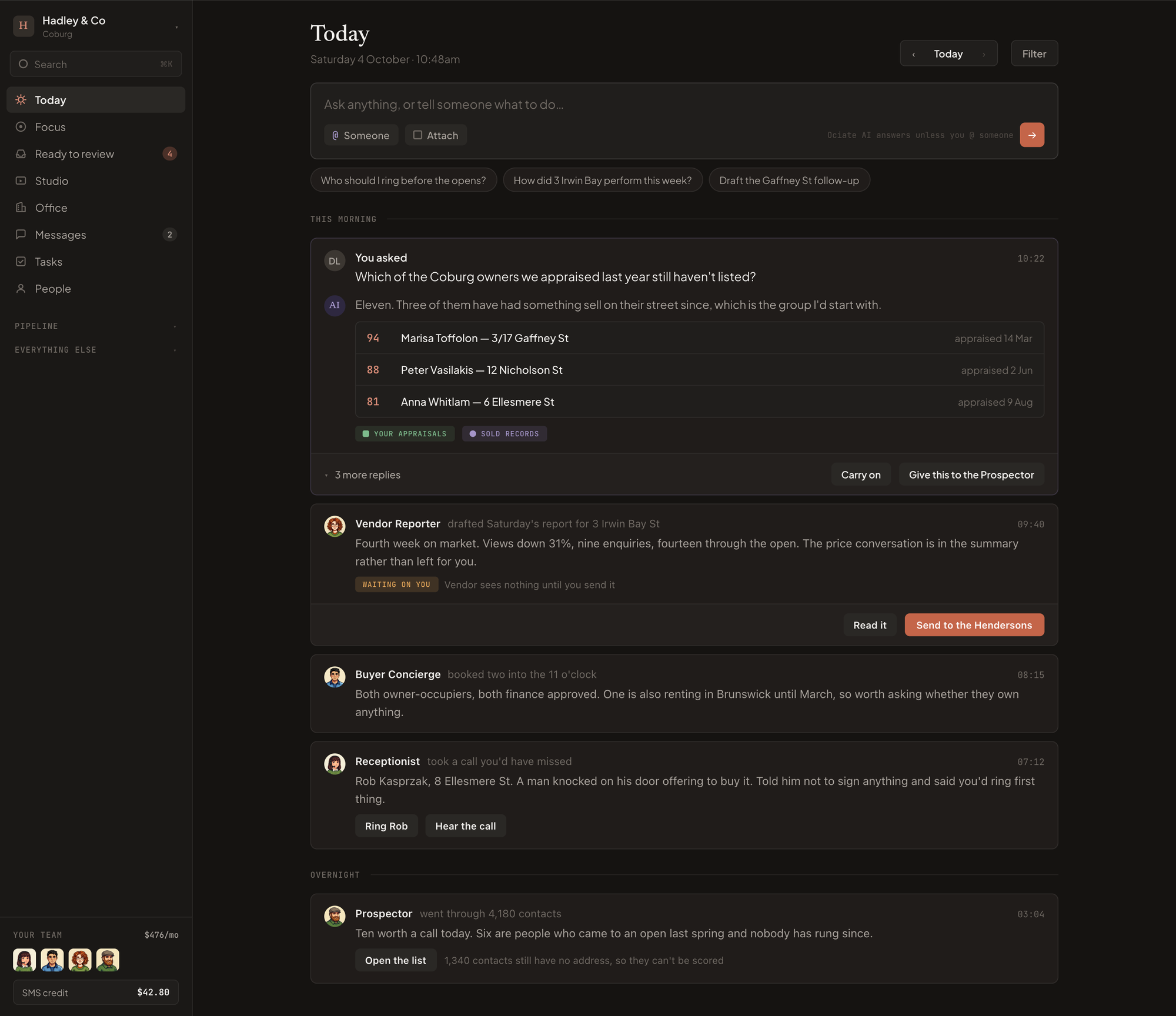
At the top is a box you can ask anything or tell someone what to do. "Which of the Coburg owners we appraised last year still haven't listed?" gets an answer with the names in it. "Get the Prospector to warm up everyone on Gaffney St" goes to the Prospector.
Under the box is the day as it happened, newest first. Your conversations, with a short summary of each. What each of your team did, in their own words, with the one or two things you can do about it right there: read the report and send it, ring the person back, open the list. Things waiting on you are marked as waiting on you.
If you have not hired anyone yet, Today shows you what they would have done, priced, so you can decide whether it is worth it.
Asking questions
The AI behind all of this got a lot better at answering questions about your own business. It can now look across your contacts, listings, campaigns, call lists and messages to answer things nobody wrote a report for. "Who replied to the August buyer campaign and said they are still looking?" is one question now, not three screens and a spreadsheet.
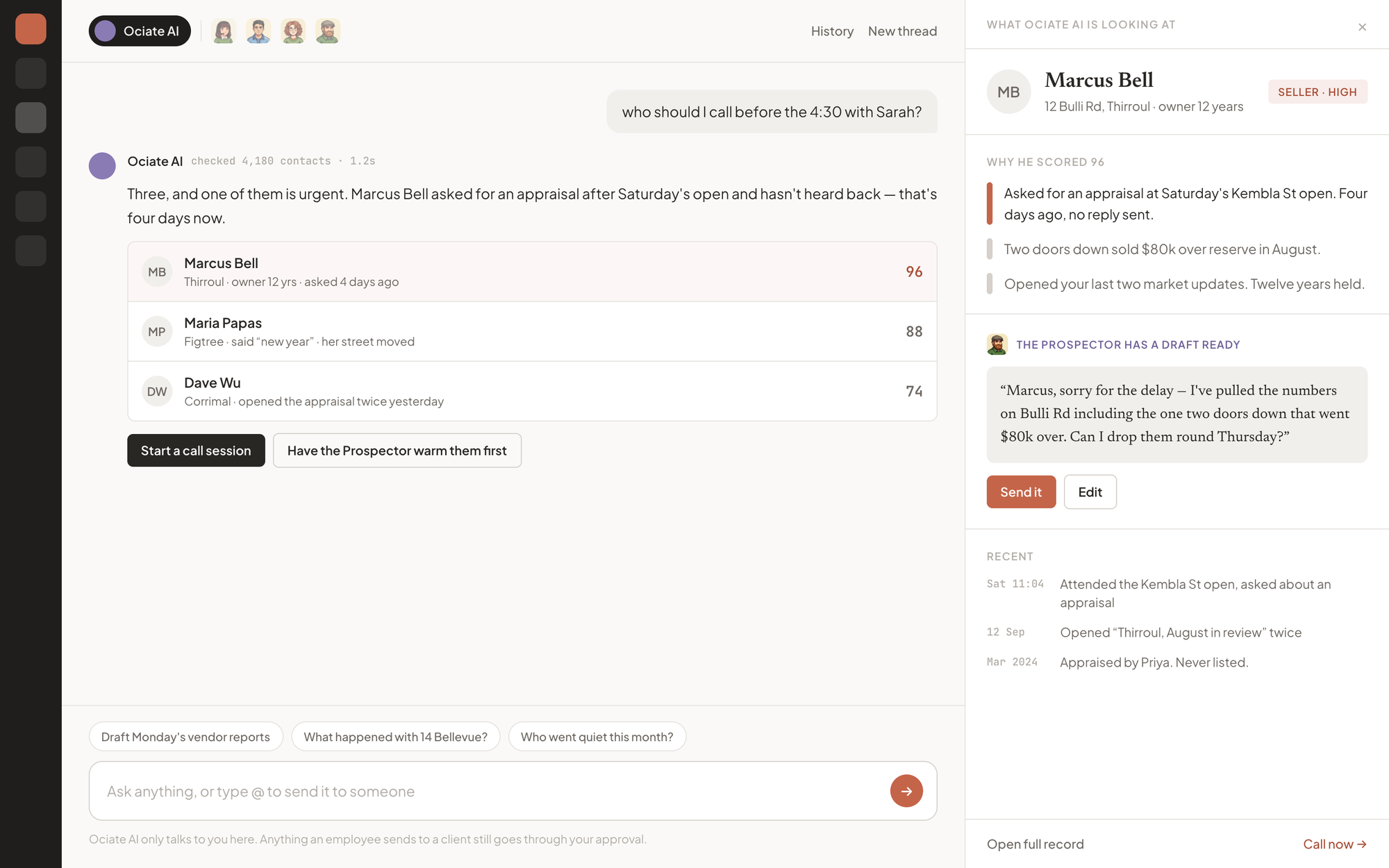
Every answer shows its working: the steps it took, and the records it is based on, beside the conversation. Numbers in an answer are checked against the data it pulled. If it could not check one, it says so.
Flows for you
Flows used to be things that happen to your contacts. Now there is a second kind: things your team does for you. "Every weekday at 7, email me the call list." "Text me when a vendor rings." "Tell me when something is waiting on me." You describe it in a sentence, it shows you what it understood, and nothing exists until you press start.
You can describe a contact flow the same way now. "Answer enquiries within five minutes and stop chasing after the second text" turns into the steps, and you can describe a change to an existing one rather than editing it by hand.
A few smaller things
- A call nobody answers now goes to voicemail instead of silence, for new users. Existing phone settings were left exactly as you set them.
- Flows stop when somebody at the office has already spoken to the person, so nobody gets an automated follow-up to a conversation they just had with you.
- Every employee's price is shown with GST, and what each one includes each month is on the hiring sheet before you hire.
What it costs
The platform is what it was. The team is extra, priced per person, on the same bill: $79 to $199 a month each, plus GST. Let anyone go from their desk and they come off the bill that day, prorated. Pausing someone keeps their line, the same as a seat. Most offices start with one, usually the Buyer Concierge, because enquiries answered at 9pm instead of 11am is the easiest thing in the world to measure.
If you have been with us a while, your four are already in the Office, waiting, and they are part of the plan you already pay for. They do nothing until you press Put them to work, and putting them to work costs nothing extra. Everything you already do, asking the assistant to build an audience and send a campaign, works exactly as it did.